
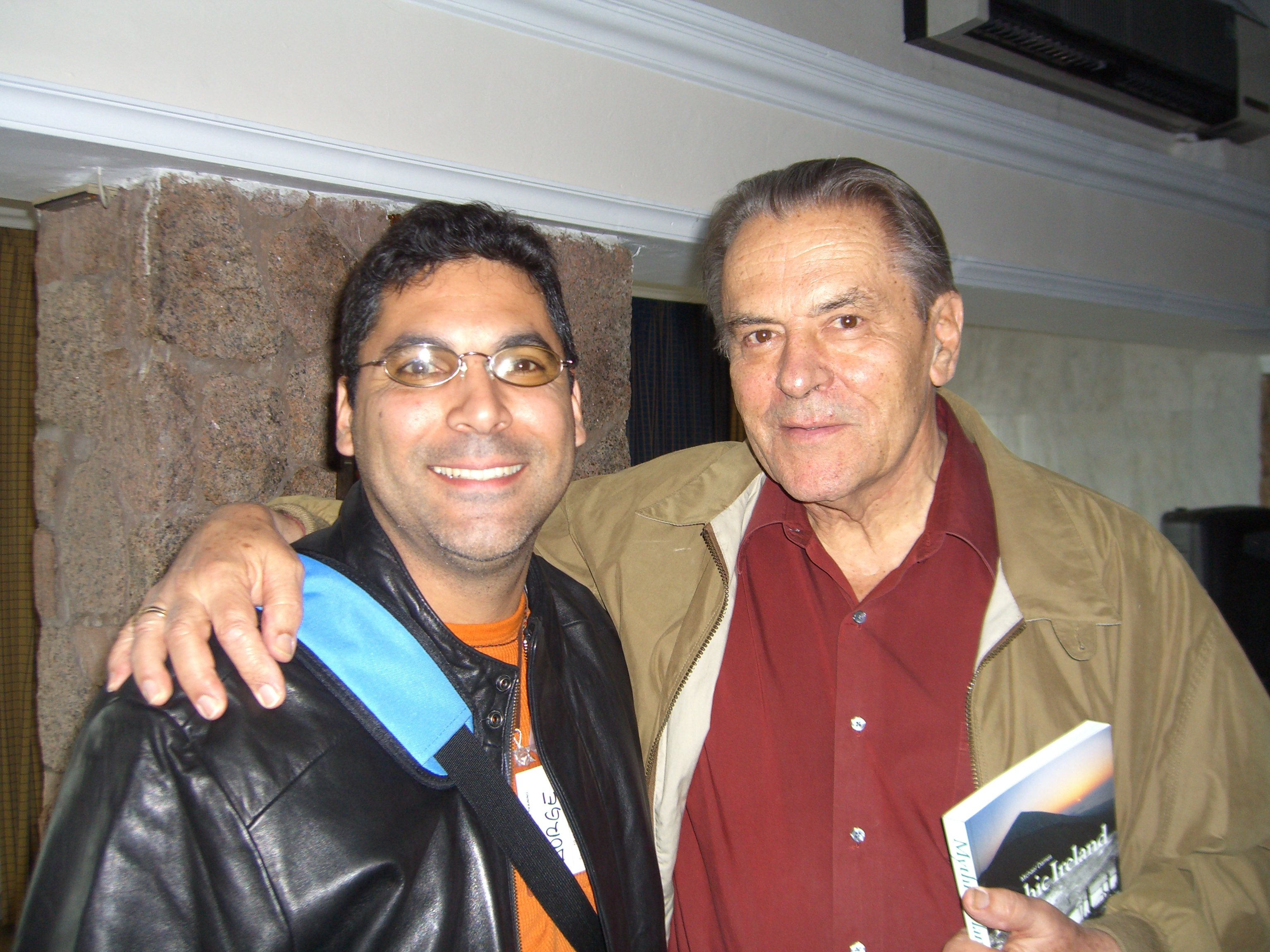
In 2006 I had the pleasure of meeting with Stanislav Grof, whose Theory of Basic Perinatal Matrixes showed me a new dimension to Alcoholism and Drug abuse. Grof research in this area is by far one of my favourites, and the breathing technique he developed called Holotropic Breathwork is an excellent tool to support those suffering from addiction problems.
Grof theory of four Basic Perinatal Matrixes (BPM) which can be thought of as intrauterine life, labor, passage through the birth canal and birth, establishes a relationship between different psychopathological syndromes and events experienced by the baby during these stages.
In the context of alcoholism and drug abuse Grof establishes that the individual is looking to re-experience the wonderful sensation of unity felt during intrauterine life through the abuse of alcohol and drugs as a way to escape from emotional pain, depression, stress, guilt and low self esteem. Alcohol and drugs tend to inhibit emotions and painful sensations but produce a confused state of mind and indifference towards the problems and worries in the present and past. This state is similar to the one experienced in the womb but they are not identical, and this is where alcoholism and drug abuse is the result of an error in interpretation of the unconscious dynamics of the individual. Contrary to alcohol and drug abuse, the Trascendental States in the womb are characterized by re-connection to sensorial perception, serenity, clarity of thoughts, abundance of philosophical and spiritual comprehension and richness of emotional content. Grof also adds that in alcoholism and drug abuse there is a tendency of the individual to escape from the painful emotions experienced during the second BPM by returning the the first BPM. In this case the influence of the second BPM is seen as a correspondence between difficult life situations and labor.
Another Transpersonal mechanism of alcoholism and drug abuse is more indicative of influences from the third BPM. In this case, birth is the first big challenge we face in life. Birth could be one of the most painful and stressful situations the individual meets in life. The imprint of what happens during birth remains influencing an individuals life. The use of anesthetics during birth could set the stage for later in life abusing alcohol and drug as a way to mimic the use of anesthetic during labor. The imprint of going through birth and going out to the World through great effort but with success and without anesthetics leaves a sensation of optimism and trust with respect to themselves and future challenges. On the contrary, an exhausting and weakening birth that was affected by anesthetics will leave a fatalistic and pessimistic imprint. It will mark the individual with the impression that the World is complicated, a sensation of underachievement and desperation that was solved through the use of numbing chemicals. It is then not a coincidence that the individual seeks that same effect from alcohol and drugs to resolve life situations. An important fact that Grof points out is the evidence that shows the increase in drug addiction and alcoholism coincident with the introduction of anesthetics during birth.
Grof theory points to the root cause of many psychopathological syndromes. But what if it could also be used to explain a more cohesive model of biophysiological dysfunction and disease? As a Naturopathic Medicine graduate we are taught to look for the root cause. The impact of this model in the application of Natural Cures deserves to be studied. The relationship between the Mind and the Body is far more complicated than current models such as the General Adaptation Syndrome, where stress (Emotional, Biophysical, Environmental, Cultural) leads to a self-exhaustion state of the physical body resources.
